
Climate Justice Taranaki’s Toitū Taranaki 2030 carbon neutral transition plan
After the NZ government decided to ban new permits for offshore oil and gas drilling and onshore drilling permits (everywhere except Taranaki), a ‘Roadmap’ was written to transition the community. But, it was dominated by oil and gas and big industry who wanted to focus on new energy sources and greenwash technology.
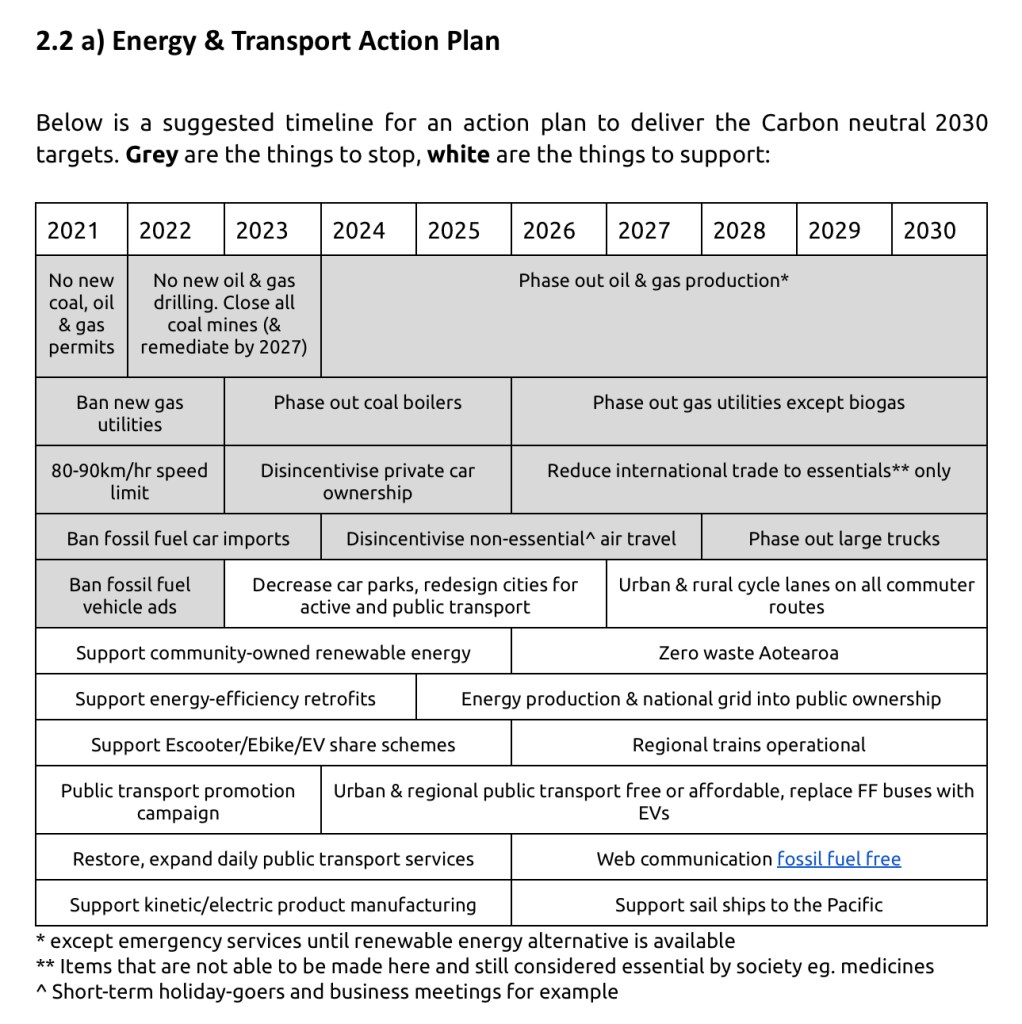
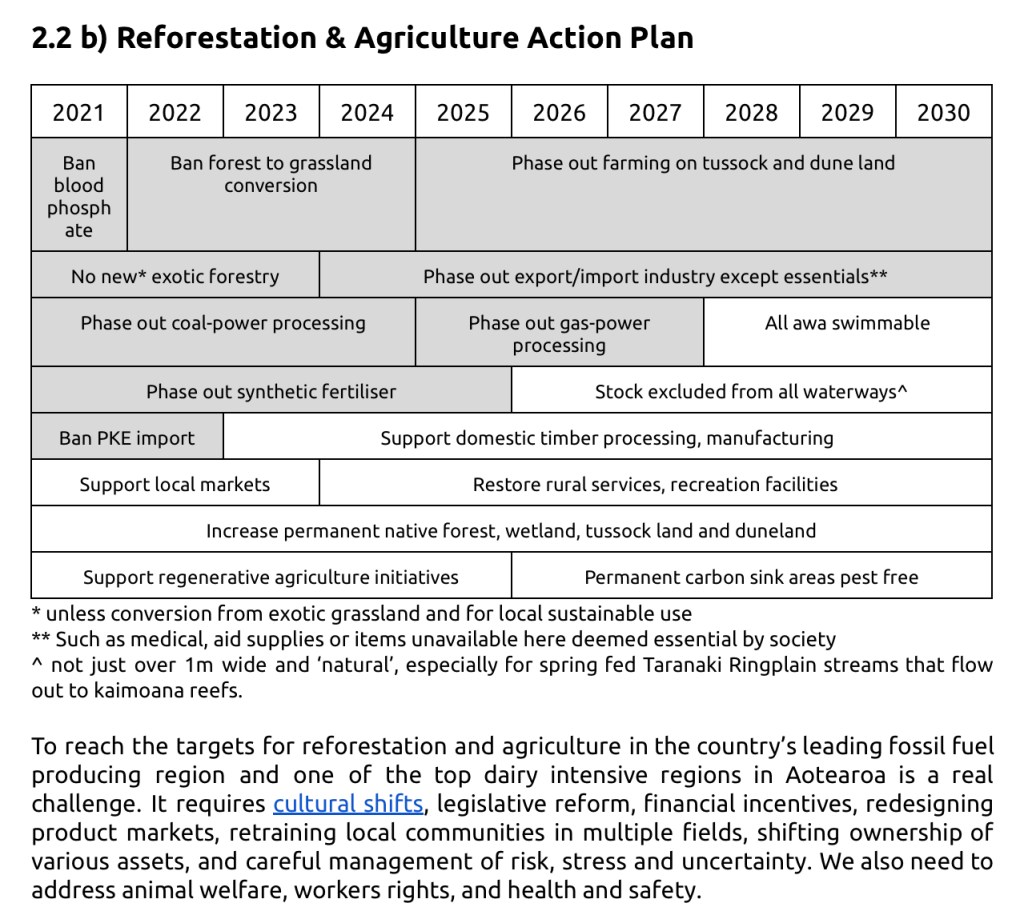
Climate Justice Taranaki (CJT) and other members of the community decided to write their own plan using independent scientific research, case studies and expert advice. The plan outlines what the real problems are, sets carbon zero emissions targets and suggests strategies and action plans to create the solutions that are needed urgently. Published March 2021.
Note: since publication, CJT signed onto the coalition RiseUp4ClimateJustice’s demands including ‘No Dairy exports’ and are now more in favour of what is termed ‘carbon negative’ by 2030 goals.
“We’re not telling you to keep talking about reaching net zero emissions or carbon neutrality by cheating and fiddling around with numbers… We’re not telling you to offset your emissions by just paying someone else to plant trees in places like Africa while at the same time forests like the Amazon are being slaughtered at an infinitely higher rate. Planting trees is good of course but it is nowhere near enough of what is needed and it cannot replace real mitigation and rewilding nature… We don’t need a ‘low carbon economy’. We don’t need to lower our emissions. Our emissions have to stop… We must forget about net zero, we need real zero.”
— Greta Thunberg, 2019, Davos.
“Given that large dairy corporations like Fonterra export 95% of their product overseas to around 130 different countries and use massive amounts of fossil fuel to produce, process, transport and package their product, it is an industry that needs a climate justice overhaul. At 22.5% of our country’s total greenhouse gas emissions, the dairy industry is our largest single greenhouse gas emitter and even more so when transport and production emissions are also considered. With dairy industry debt at around $41 billion in 2018 and the average farm owner-operator owing more than 50% of their assets including land, change is ripe for farmers to downshift and/or diversify to smaller farms focussed on lower inputs and environmental impacts, creating quality domestic products with less debt and less competition.”
— Toitu Taranaki 2030
 END BIG DAIRY